


Turning Concepts into Reality
Design for Manufacture

At Raamps Industries, we specialize in transforming your ideas into manufacturable solutions. Our in-house design team brings a wealth of experience in sheet metal manufacturing, ensuring your parts are optimized for mass production. Whether for our own processes or those outsourced, we design with precision and efficiency in mind.
Our 3D Design office is equipped with advanced 3D printing technology, allowing us to quickly prototype and validate component parts. This rapid prototyping capability ensures optimal performance without the delays of sourcing or manufacturing components, and without the upfront costs of tooling.
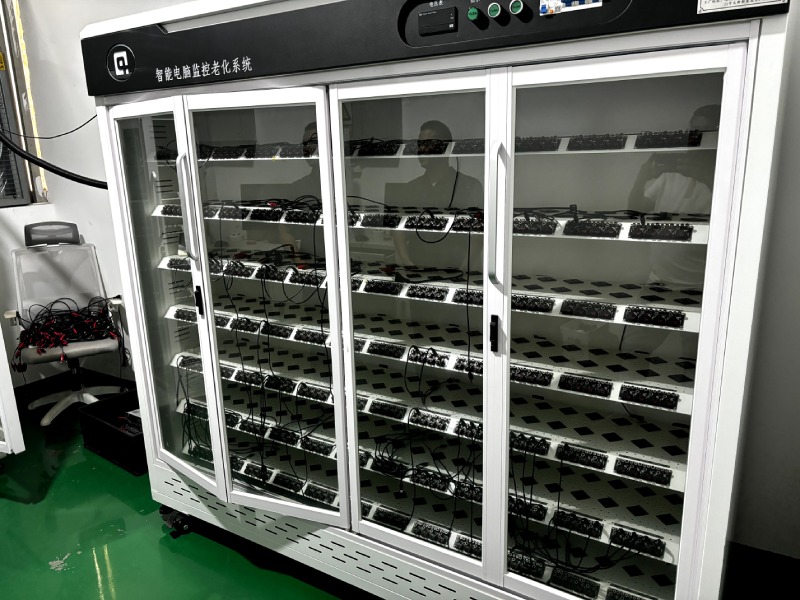

Even if you already have a design in hand, we offer comprehensive design reviews to refine your product for the most cost-effective manufacturing methods. Additionally, we can design custom jigs to streamline production and assembly, reducing labor costs while enhancing quality and consistency.
Let us help you bring your vision to life—efficiently, effectively, and with the highest standards of excellence.
Design for Manufacture in India – Raamps Industries
Making Your Product Easier to Build — That’s Design for Manufacture
A great product idea can fall flat in production if the design hasn’t been thought through from a manufacturing perspective. That’s a challenge many businesses in India face — the engineering design looks good on screen, but once it reaches the factory floor, it creates complications, waste, delays, and unnecessary cost.
At Raamps Industries, we help you avoid exactly that. Our Design for Manufacture (DFM) approach ensures that your product or component is designed not just to perform well — but to be manufactured efficiently, consistently, and cost-effectively. It’s one of the most practical things you can do before production begins.
What Is Design for Manufacture?
Design for Manufacture — often written as DFM — is an engineering discipline that focuses on designing parts and products in a way that makes them easier, faster, and more cost-effective to produce. Rather than treating design and manufacturing as two separate steps, DFM brings them together from the very beginning.
The idea is straightforward: the easier something is to manufacture, the more consistent and affordable the production process becomes. DFM considers the capabilities and constraints of the manufacturing process — machining, fabrication, welding, casting, moulding — while the product is still being designed. This prevents costly redesigns later and reduces the risk of quality issues during production.
For businesses in India that are scaling up, moving from prototype to production, or trying to bring down manufacturing costs without compromising quality — Design for Manufacture is a practical and valuable discipline to apply.
How Raamps Industries Approaches Design for Manufacture
At Raamps Industries, Design for Manufacture is not a checkbox exercise — it is a genuine collaboration between our engineering team and yours. Here is how we work through it:
- Drawing and Design Review: We start by reviewing your existing drawings, CAD models, or product specifications to understand what the part or assembly needs to do
- Manufacturability Assessment: Our team evaluates the design from a production standpoint — identifying features that may be difficult to machine, fabricate, or weld, and flagging them for discussion
- Material Review: We assess whether the specified material is the most suitable choice for both performance and manufacturing efficiency
- Tolerance and Fit Analysis: We review dimensional tolerances to ensure they are achievable with standard manufacturing processes — avoiding unnecessarily tight tolerances that drive up cost
- Process Selection: We recommend the most suitable manufacturing process for each component — whether that is CNC machining, fabrication, casting, or a combination
- Design Optimisation: Where improvements are possible, we work with you to simplify geometry, reduce the number of parts, standardise features, or adjust specifications to improve manufacturability
- Feedback and Finalisation: We provide clear written feedback and updated drawings or notes so your team can make informed decisions before production begins
Why Design for Manufacture Matters in Indian Manufacturing
Indian manufacturing is becoming increasingly competitive. Businesses are under pressure to improve quality, reduce costs, and meet tighter delivery schedules — all at the same time. In that environment, getting the design right before production starts is not a luxury, it is a necessity.
When DFM principles are applied properly, the benefits show up in concrete ways:
- Fewer production problems and less rework on the shop floor
- Lower scrap rates because the design accounts for real process capabilities
- Faster production because the process is planned from the start
- Better first-article results because tolerances and features are achievable
- Reduced tooling and setup costs through smarter design choices
- Smoother transition from prototype to full-scale production
Who Benefits from Design for Manufacture?
DFM is relevant across a wide range of businesses and project types:
- Product developers and start-ups moving from prototype to production for the first time
- OEMs looking to reduce the manufacturing cost of existing product lines
- Engineering firms designing components or assemblies for clients in India
- Importers seeking to localise manufacturing in India and needing to adapt designs for local processes
- Companies experiencing high scrap, rework, or quality issues on production lines
- Businesses planning to introduce new variants or product lines
DFM Across Different Manufacturing Processes
At Raamps Industries, our DFM capability spans the manufacturing processes we operate in:
- Machined components: Reviewing features for CNC turning and milling, checking hole depths, undercuts, thread specifications, and surface finish requirements
- Fabricated structures: Evaluating weld joint accessibility, plate thicknesses, standard section sizes, and fitment tolerances
- Sheet metal parts: Assessing bend radii, minimum material distances, hole-to-edge distances, and forming sequence
- Tool and die components: Reviewing die designs for ease of machining, maintenance access, and performance life
Raamps Industries – A Manufacturing Partner That Thinks Ahead
What makes Raamps Industries a reliable DFM partner is that we are also a manufacturer. We do not just review drawings in isolation — we bring real, hands-on manufacturing knowledge to the table. Our team understands what is genuinely achievable on a CNC lathe, a press brake, or a welding fixture — and we use that knowledge to help you make better design decisions.
If you are based anywhere in India and want to ensure your product or component is designed to be manufactured efficiently and accurately, our team is ready to work with you. DFM reviews can be conducted remotely or in person depending on your preference and project scope.
Frequently Asked Questions – Design for Manufacture
Q1. What is Design for Manufacture (DFM) and why does it matter?
A: Design for Manufacture is an engineering process that optimises a product or component’s design to make it easier, faster, and more cost-effective to produce. It matters because problems caught at the design stage are far easier and less expensive to fix than problems discovered during or after production.
Q2. At what stage of product development should DFM be applied?
A: Ideally, DFM should be applied during the early design phase — before drawings are finalised and tooling or production has begun. However, it can also be applied to existing designs when a business is experiencing manufacturing problems or trying to reduce production costs.
Q3. Can Raamps Industries review designs for manufacturing processes it does not use in-house?
A: Our DFM expertise is strongest in the processes we operate — CNC machining, fabrication, sheet metal, and tool and die manufacturing. For processes outside our direct scope, we will clearly communicate the limits of our review and recommend specialist input where needed.
Q4. What information do I need to provide for a DFM review?
A: Ideally, provide CAD files (STEP, IGES, or similar), 2D engineering drawings, material specifications, and any relevant performance or application requirements. The more context you share, the more useful our feedback will be.
Q5. Will DFM change the function or performance of my product?
A: DFM focuses on how a product is made, not on compromising its function. Any design changes suggested through our DFM process are discussed with you first. We will never recommend a change that affects the product’s intended performance without your knowledge and agreement.
Q6. How long does a DFM review take?
A: The time required depends on the complexity of the part or assembly. A simple component may be reviewed within a few days, while a more complex assembly or product with multiple components may take longer. We provide an estimate at the outset after reviewing the scope.
Q7. Can DFM help reduce my manufacturing costs?
A: Yes. DFM frequently identifies opportunities to simplify geometry, standardise features, adjust tolerances, or select more process-friendly materials — all of which can meaningfully reduce the cost of production without affecting product quality or performance.
Q8. Is DFM only for new products, or can it be applied to parts already in production?
A: DFM can be applied to parts already in production, particularly when a business is experiencing quality issues, high scrap rates, or wants to reduce manufacturing costs on an existing component. A DFM review on existing parts is sometimes called a design optimisation or value engineering review.
Q9. Does Raamps Industries also manufacture the parts after completing the DFM review?
A: Yes. In many cases, clients engage us to carry out the DFM review and then proceed to manufacture the components with us. This ensures continuity — the same team that reviewed the design is producing the parts.
Q10. How do I get started with a DFM review at Raamps Industries?
A: Reach out to our team through our website or contact number, share a brief description of your product or component and the challenges you are facing, and we will arrange a consultation to discuss the scope and next steps.


